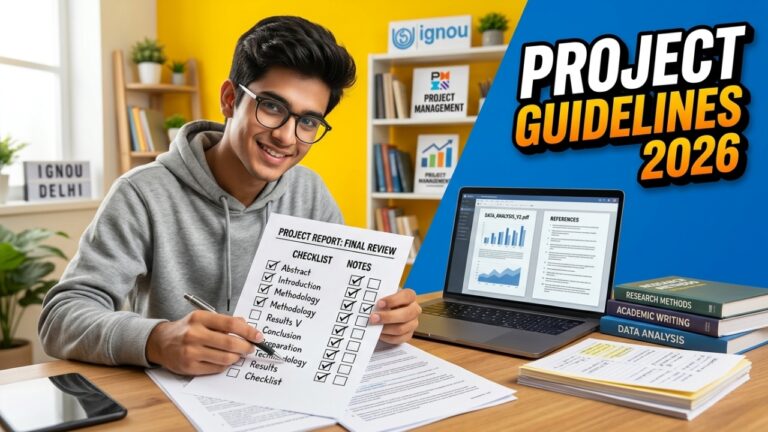
Common Errors Made by Students While Working on CPIP-04 Projects and How to Prevent Them
Common Errors Made by Students

Table of Contents
The CPIP-04 project of IGNOU’s Certificate in Participatory Project Planning (CPIP) course is among the most important components of the program. It is through this project that students gain first and experience in project planning, community participation, and designing. But numerous students commit errors while working on the project, which results in reduced marks or even rejection of reports.
In this guide, we’ll explore the most common mistakes students make in CPIP-04 projects and provide practical strategies to avoid them — ensuring your project is professional, original, and impactful.
1. Choosing the Wrong Project Topic
The foundation of any successful CPIP-04 project lies in the topic selection. Many students fail here by choosing irrelevant or unmanageable topics.
Common Errors:
- Selecting a topic that is too broad or too narrow.
- Selecting a topic that does not have any connection with participatory project planning.
- Selecting a topic out of convenience rather than for its educational significance.
How to Steer Clear of This Error:
- Select a topic concerning community participation, project management, or social development.
- Verify if your topic permits fieldwork and data collection.
- Consult your project guide on your topic ideas prior to finalizing.
- Example: Rather than “Women Empowerment,” use “Women’s Involvement in Self-Help Groups in Rural Bihar.”
2. Absence of Specific Objectives
It is a common error to begin a project without objectives. Objectives are the driving force of your research.
Typical Mistakes:
- Formulating vague objectives such as “To study community participation.”
- Listing numerous objectives, which creates confusion.
How to Avoid Making This Error:
- Apply the SMART formula (Specific, Measurable, Achievable, Relevant, Time-bound).
- Narrow down your goals to 3–5 major questions.
- Example: “To evaluate the contribution of local leaders towards rolling out water conservation initiatives in rural Rajasthan.”
3. Inadequate Understanding of Participatory Approach
The CPIP-04 project is centered on participatory planning, but students make a poor understanding of its fundamental principles.
Typical Mistakes:
- Concealing it as any normal research project rather than a community-based participatory project.
- Omitting stakeholder involvement and comments.
Avoiding This Blunder:
- Highlight involvement of the community throughout the process.
- Make use of interviews, focus group discussion, and participatory rural appraisal (PRA) techniques.
- Record how stakeholders were involved in planning and decision-making.
4. Inadequate Literature Review
A well-written literature review lends authenticity to your project. Most students omit this section or just cut and paste from the internet.
Typical Mistakes:
- Making use of old or useless sources.
- Plagiarizing from websites without comprehending it.
- Failure to associate literature with project goals.
Avoiding This Error:
- Use books, journals, and reputable online articles on participatory planning.
- Briefly highlight findings from past research.
- Describe how your research bridges the research gap.
- Always properly cite your sources using IGNOU’s referencing system.
5. Poor Research Methodology
The methodology section explains how you carry out your research. Numerous students produce unclear or inaccurate methods.
Errors that are common:
- Not delineating the sample size or target group.
- Selecting inappropriate data collection tools.
- Failing to address the participatory aspect of research.
Avoiding This Error:
- Describe your sampling method, research design, and data collection tools clearly.
- Describe why you chose those tools.
- State how community members were involved in validation and data collection.
- Example: Participatory mapping or focus group discussions instead of just surveys.
6. Inaccurate or Incomplete Data Collection
Data collection is where practice collides with theory. Flaws here can destroy the project.
Typical Mistakes:
- Gathering data without checking its accuracy.
- Using secondary sources exclusively.
- Failing to incorporate voices from all parties.
How to Get Around This Blunder:
- Do field visits and gather primary data whenever it is feasible.
- Validate information using multiple sources.
- Take care and record observations in a systematic manner.
Maintain confidentiality and respondents’ consent.
7. Ineffective Data Analysis
Students usually gather good data but do not analyze it well.
Errors Often Made:
- Showing data without explanation.
- Showing irrelevant statistics.
- Failing to relate analysis to objectives.
Avoiding This Error:
- Classify data according to themes or questions.
- Present findings using charts, graphs, and tables.
- Explain what the data indicates concerning community planning and participation.
- Compare findings with literature review results.
8. Poor Discussion and Findings
Your insights are where the discussion happens. Too many students just recite results, not interpret them.
How Not to Make This Error:
- Connect your findings to the objectives and participatory framework.
- Describe successes and difficulties.
- Consider what your findings will mean to future participatory projects.
9. Overlooking Ethical Principles
Ethical errors are a severe issue and might result in the rejection of a project.
Common Mistakes:
- Collecting data without participant consent.
- Misusing data or breaching confidentiality.
How to Prevent This Error:
- Get informed consent prior to interviews or questionnaires.
- Maintain participant data anonymous.
- Be open about the aim of your research.
10. Plagiarism
Plagiarism is an easy and grievous error that may result in disqualification.
How to Prevent This Error
- Always write in your own words.
- Cite all sources appropriately.
- Utilize plagiarism checkers such as Turnitin or Grammarly to check for originality.
11. Omitting the Participatory Reflection
CPIP-04 projects focus on reflection and learning from community experience.
Typical Mistakes:
- Omitting the reflective aspect.
- Failure to describe what was learned from the process.
How to Avoid Making This Blunder:
- Add a segment with the heading “Reflections and Learning”.
- Describe challenges, experiences, and lessons obtained.
- Show how the project enhanced your understanding of participatory development.
12. Poor Formatting and Structure
Even good research can lose marks if it’s poorly presented.
Common Errors:
- Missing sections like acknowledgements or abstract.
- Inconsistent formatting and font.
- Ignoring IGNOU’s project report structure.
How to Avoid This Mistake:
Follow the structure below:
- Title Page
- Certificate
- Acknowledgement
- Abstract
- Table of Contents
- Introduction
- Objectives
- Literature Review
- Methodology
- Data Analysis and Findings
- Discussion
- Conclusion and Recommendations
- References
- Annexures/Appendices
13. Weak Recommendations
Recommendations demonstrate how your results can make participatory projects better in the future.
Common Errors:
- Providing imprecise or impractical recommendations.
- Reporting findings rather than suggesting solutions.
How to Avoid This Mistake:
- Make recommendations based on evidence-driven data.
- Prioritize empowerment of the community, sustainability, and inclusivity.
- Example: “Create local committees to facilitate women’s involvement in decision-making.”
14. Lack of Time Management
Students usually begin late and try to hurry up with the project, and this generates mistakes.
How to Avoid This Mistake:
- Create a timeline for data collection, topic selection, analysis, and writing.
- Make small weekly objectives.
- Steer clear of last-minute printing or editing.
15. Failure to Take Feedback
Not taking feedback from guides or mentors creates unnecessary mistakes.
How to Avoid This Mistake:
- Show drafts to your project supervisor.
- Take their feedback prior to final submission.
- Use peer review to determine areas for improvement.
16. Failure to Connect Theory and Practice
CPIP-04 projects should link classroom learning to realities in the field.
How to Avoid Making This Error:
- Use theoretical concepts such as community participation, PRA tools, and models of sustainability.
- Describe how your evidence supports or contradicts prevailing theory.
17. Failing to Support Claims with Evidence
Each statement in your project needs to be backed up with data or references.
How to Avoid This Mistake:
- Use actual statistics, quotes, or observations.
- Do not make assumptions without evidence.
- Verify all factual data.
18. Overlooking Annexures and Supporting Documents
Annexures enhance the project by offering clarity.
How to Avoid This Mistake:
- Include questionnaires, photographs, maps, and interview transcripts.
- Title each appendix and cite it in the main report.
19. Poor Conclusion
A good conclusion provides closure to your research.
How to Avoid This Mistake:
- Present your findings succinctly.
- Emphasize main learnings and implications.
- Do not bring in new ideas.
20. Submitting Without Proofreading
Spelling and grammatical mistakes render good reports to appear unprofessional.
Avoiding This Error:
- Proofread your report several times.
- Employ grammar software such as Grammarly or Microsoft Word Editor.
- Format consistency checking before submission.
Conclusion
Finishing the CPIP-04 project successfully isn’t merely about producing a report—it’s about showing your mastery of participatory project planning in real life. By steering clear of typical errors such as ill-defined objectives, poor data gathering, insufficient reflection, or plagiarism, you can produce a credible, insightful, and well-presented project that will be highly graded and contribute value to your learning.
Remember:
Select a relevant topic.
State clear objectives.
Involve the community sincerely.
Upkeep ethics and original Stick to IGNOU’s formatting and structure guidelines.
Your CPIP-04 project is not just an academic requirement—it’s your chance to participate in productive community development through planning.