10 Critical Reasons Your Proposal Was Rejected and How to Fix Them
10 Critical Reasons Your Proposal Was Rejected and How to Fix Them
Table of Contents
Reasons your proposal was rejected is something many students and professionals struggle to understand. Whether it is a project proposal, research proposal, or academic submission, rejection can be frustrating.
However, most proposal rejection reasons are common and avoidable. Understanding these mistakes can help you improve your proposal and increase your chances of approval.
In this guide, you will learn the top 10 reasons why proposals get rejected and how to fix them effectively.
1. Lack of Clear Objective
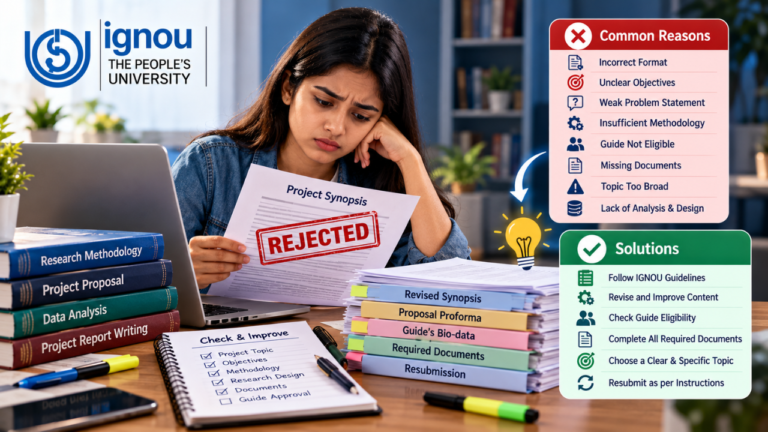
One of the most common proposal rejection reasons is unclear objectives.
If your proposal does not clearly explain what you want to achieve, evaluators may reject it. A strong proposal should have clear and specific goals.
Always define your objectives properly.
2. Poor Problem Statement
A weak problem statement can lead to rejection.
Your proposal should clearly explain the problem you are addressing. If the problem is not relevant or well-defined, the proposal loses its importance.
Make sure your problem statement is clear and meaningful.
3. Not Following Guidelines
Ignoring instructions is a major mistake.
Every proposal has specific guidelines related to format, structure, and content. Not following these can lead to immediate rejection.
Always read and follow guidelines carefully.
4. Plagiarism or Copied Content
Using copied content is a serious issue.
Evaluators check originality, and plagiarism can result in rejection. Your proposal must be written in your own words.
Always maintain originality in your work.
5. Weak Research and Data
Lack of proper research is another reason proposals get rejected.
Your proposal should include reliable data and analysis. Without strong research, your proposal appears weak and incomplete.
Use proper data to support your points.
6. Poor Structure and Formatting
Presentation matters a lot.
If your proposal is not well-structured, it becomes difficult to understand. Poor formatting reduces readability and professionalism.
Use a proper structure with headings and sections.
7. Unrealistic Objectives or Scope
Setting unrealistic goals can lead to rejection.
Your proposal should be practical and achievable. Overly ambitious plans without proper resources are often rejected.
Keep your objectives realistic
8. Lack of Proper Methodology
Methodology explains how you will complete your project.
If your proposal does not include a clear method, it may be rejected. Evaluators need to understand your approach.
Always include a detailed methodology.
9. Incomplete Proposal Submission
Submitting an incomplete proposal is a common mistake.
Missing sections like objectives, conclusion, or references can lead to rejection. Always review your proposal before submission.
Ensure everything is complete.
10. Weak Conclusion and Impact
A proposal should clearly explain its impact.
If your conclusion does not highlight the importance or benefits of your project, it may be rejected.
End your proposal with a strong conclusion.
How to Avoid Proposal Rejection
To avoid proposal rejection:
- Follow guidelines strictly
- Keep content original
- Use proper structure
- Include clear objectives
- Add strong research and data
- Review before submission
These steps improve your chances of approval.
Importance of Strong Proposal Writing
A good proposal is the foundation of a successful project.
It helps in:
- Getting approval
- Securing better evaluation
- Presenting ideas clearly
Improving proposal writing skills is essential for academic success.
Frequently Asked Questions
What are the main reasons your proposal was rejected?
Common reasons include poor structure, lack of clarity, weak research, and ignoring guidelines.
How to avoid proposal rejection?
Follow guidelines, keep content original, and use proper structure.
Can a rejected proposal be resubmitted?
Yes, after making corrections, it can be submitted again.
Does formatting affect proposal approval?
Yes, proper formatting improves readability and evaluation.
What is the most common proposal mistake?
Lack of clear objectives and poor structure.
How to improve proposal writing?
Practice writing, follow guidelines, and review your work carefully.
Conclusion
Understanding the reasons your proposal was rejected helps you avoid mistakes and improve your work. Most proposal rejection reasons are simple errors that can be corrected with proper planning and attention.
Focus on clarity, structure, originality, and research to create a strong proposal that gets approved.